We have all seen it happen before.
When property owners ask us how to find a roof leak that keeps returning, the answer usually points to poor initial diagnostics. A contractor patches a roof tile, but the ceiling stain returns after the very next heavy downpour.
The reason most repairs fail is simply that the first inspection never pinpointed the actual source. Water rarely falls straight down, so a quick visual patch directly above a stain usually misses the true entry point.
Our experience shows that true diagnostic work requires more than just a quick look around. Professional roof leak detection relies on thermal imaging, moisture metering, and controlled water testing to trace a leak precisely to its origin.
Let us break down exactly how each tool functions and why this methodical approach prevents recurring water damage.
Thermal (Infrared) Imaging
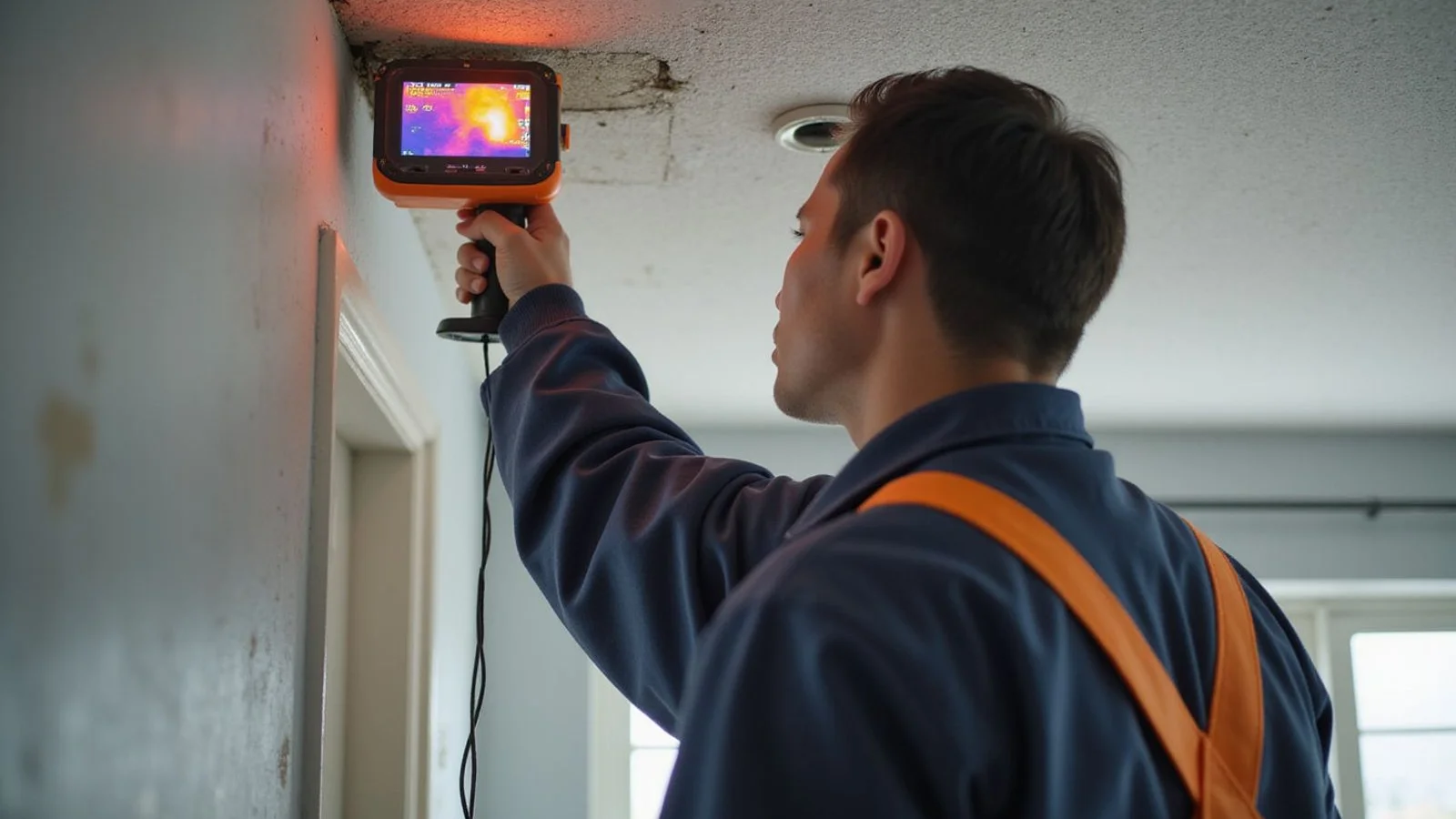
Thermal imaging cameras display surface temperature variations to highlight hidden moisture. Wet building materials undergo evaporative cooling, which makes them appear visibly colder on the camera screen than the dry areas surrounding them.
Our technicians frequently use high-resolution devices like the FLIR MR265 for this exact reason. These cameras can detect minor temperature differentials of up to 50 millikelvins. A ceiling might look perfectly normal to the naked eye. The infrared lens, however, will expose a dark blue zone of hidden moisture behind the plasterboard.
A thermal imaging roof leak inspection highlights several critical details:
- The actual spread of the wet area extends far beyond any visible water stain.
- The cool patch often forms a trail leading back to the original entry point on the roof.
- Water trapped inside roof insulation shows up as distinct cool zones along the ceiling joists.
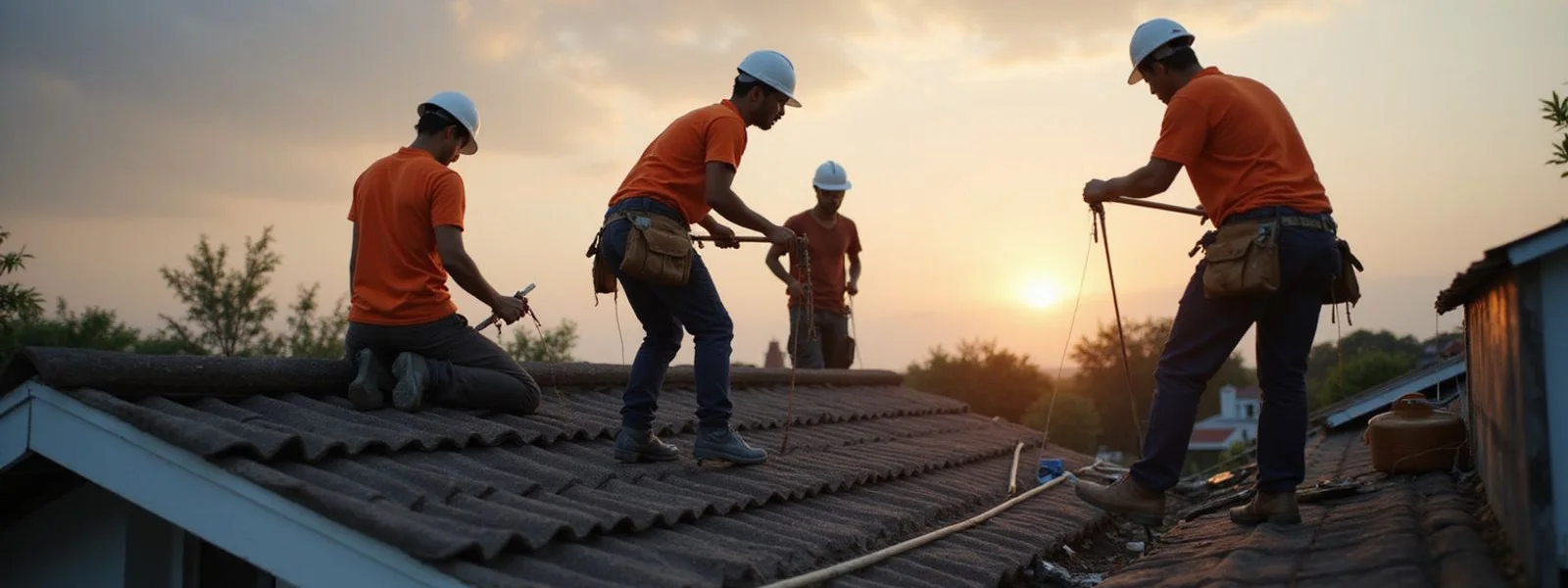
We map the path of the water from inside the house first. This internal scan provides a clear trajectory before anyone even climbs onto the roof. The exterior inspection then looks for temperature anomalies that highlight exactly where moisture is collecting under the tiles or metal decking.
Moisture Meters
A moisture meter is a diagnostic tool that measures the exact water content hidden inside building materials. By pressing this device against ceilings, timber frames, or masonry, inspectors can instantly verify if a water stain is still active.
Our teams use professional-grade pinless moisture meters to gather precise readings without damaging your interior walls. Finding a dark patch on the ceiling does not automatically mean the roof is currently leaking. A reading of 20% moisture content or higher in structural timber signals an active leak and a high risk of wood rot.
The data from the moisture meter confirms several key facts:
- Whether an old, ugly stain is actively wet or just a dry remnant from a previous repair.
- The exact perimeter of the moisture spread inside the ceiling cavity.
- Whether the internal timber framing has absorbed too much water and lost structural integrity.
We need this data because a completely dry stain from last year requires a very different approach than a ceiling that remains saturated days after a storm. The meter provides hard evidence to guide the repair strategy.
Controlled Water Testing: How To Find A Roof Leak
Controlled water testing is a targeted simulation used to recreate a leak under monitored conditions. After thermal cameras and moisture meters narrow down the suspect zone, a continuous flow of water is applied to specific roof sections to confirm the exact entry point.
Our testing protocol isolates small, specific areas of the roof one by one. Kuala Lumpur and the wider Klang Valley receive a staggering average annual rainfall of over 3,000 millimetres. Surviving that volume of water requires a perfectly sealed roof, so this testing phase mimics those intense storm conditions.
A systematic water test provides critical verification:
| Testing Objective | Why It Matters For Your Roof |
|---|---|
| Pinpoint the Entry Point | Confirms the exact cracked tile, failed flashing, or torn membrane causing the issue. |
| Identify Multiple Leaks | Older Malaysian roofs often have several small leaks contributing to one large ceiling stain. |
| Track Travel Time | Measuring how quickly water travels from the roof to the ceiling helps map the internal flow path. |
We spend considerable time on this methodical step because skipping it often leads to failed repairs. Running water over the roof while an inspector monitors the ceiling cavity below guarantees the diagnosis is completely accurate.
Why This Matters For The Repair
Finding the exact entry point ensures the subsequent repair permanently fixes the root cause of the leak rather than just hiding the symptom. Guesswork leads to temporary fixes, while diagnostic detection leads to targeted, lasting solutions.
Our focus on accurate detection directly protects your financial investment. A complete roof replacement in Malaysia can easily cost anywhere from RM12,000 for a standard single-storey home to well over RM50,000 for a large bungalow. Catching a specific failed flashing early — one of the most common ridge cap and flashing leak points we trace during detection — prevents the widespread structural damage that forces a full roof replacement.
Targeted repairs address the actual defect directly:
- A cracked concrete ridge cap gets properly re-bedded and pointed.
- Rusted or split metal flashing around a chimney is completely replaced.
- A blocked valley gutter is cleared and realigned to restore water flow.
- A thermally shocked or broken roof tile is swapped out for a new one.
We refuse to rely on guesswork when dealing with water ingress. Using scientific detection methods guarantees that the money you spend on a repair actually stops the water for good.
What Visual-Only Inspection Misses
A standard visual inspection relies solely on what a contractor can see with their naked eye while walking across the roof. This basic approach easily catches obvious damage like missing tiles or heavily rusted metal, but it misses invisible defects hidden beneath the surface.
Our diagnostic equipment frequently reveals faults that look completely normal from the outside. The intense tropical heat in the Klang Valley causes roofing materials to expand and contract daily. This thermal shock creates microscopic defects that let water in, even when the surface appears intact.
A visual-only inspection typically fails to identify:
- Hairline cracks in mortar bedding that widen during heavy monsoon rains.
- Torn or degraded sarking underlayment that is entirely hidden beneath the roof tiles.
- Multiple tiny entry points that slowly combine into a major internal leak.
- Active water pooling silently behind plasterboard walls.
We combine visual checks with advanced detection tools because the visible damage is rarely the whole story. The broken tile you can see might be a problem, but the actual leak destroying your ceiling often comes from a completely different, invisible source.
Want A Real Diagnosis?
Our roof leak repair service begins with a comprehensive, science-based leak detection process. Finding the true source of water ingress requires the right tools, proper methodology, and extensive local experience.
We visit your property, run a full diagnostic scan, and supply a detailed written report outlining the actual cause of the problem. This document provides the clarity needed before we quote a targeted, permanent fix.
The initial inspection is entirely free of charge.
If you are tired of guessing how to find a roof leak and want guaranteed results, Get in touch today to secure a dry, safe home.
Frequently Asked Questions
How do professionals find a hidden roof leak?
Why not just patch where the stain is?
Can a roof leak be fixed without finding the exact source?
Need help with this?
Our team handles roof leak repair across Puchong and the Klang Valley. Free inspection, transparent quote.