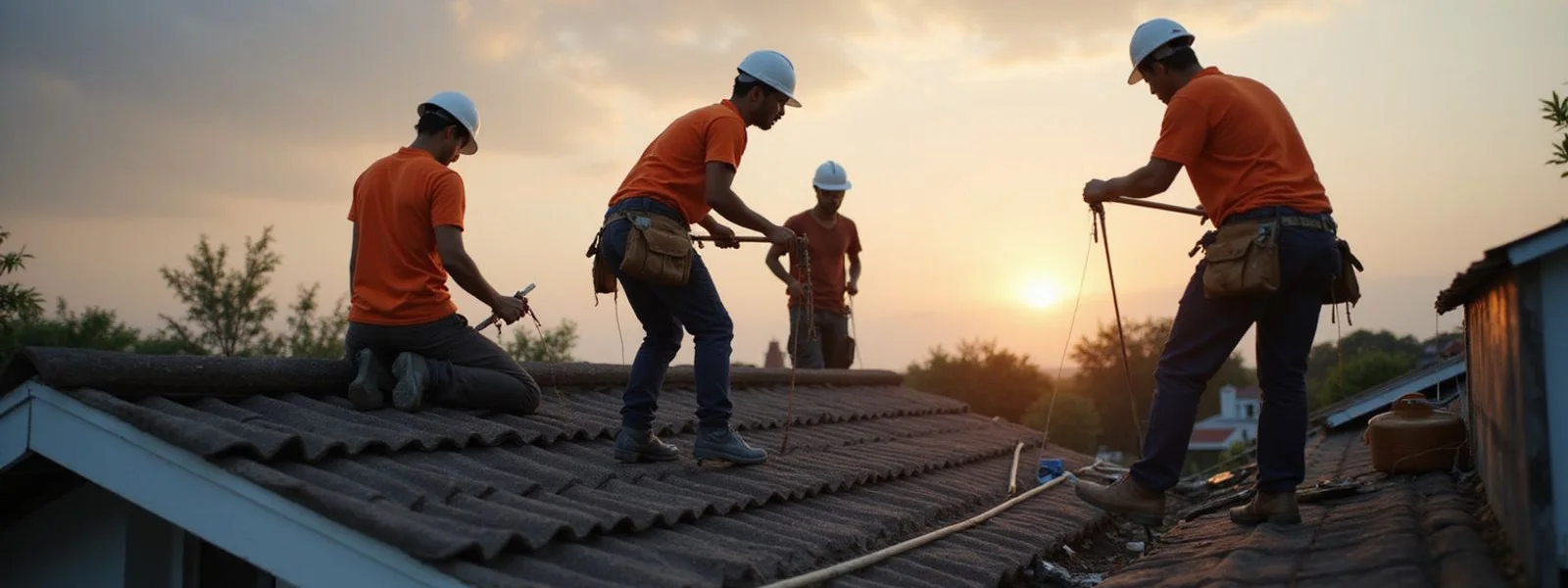
You know how frustrating it is to spot a new brown stain on your ceiling just as the rainy season hits.
We see this exact scenario play out every year across Puchong and the wider region. What causes roof leaks malaysia homeowners experience most often is rarely a complete structural failure, but rather a tiny, overlooked gap that gives way to heavy weather.
Our goal is to break down the specific components that fail most frequently in our local climate. Let’s look at the hard data, examine the exact weak points on your roof, and explore practical ways to protect your property.
Monsoon Intensity And Wind-Driven Rain
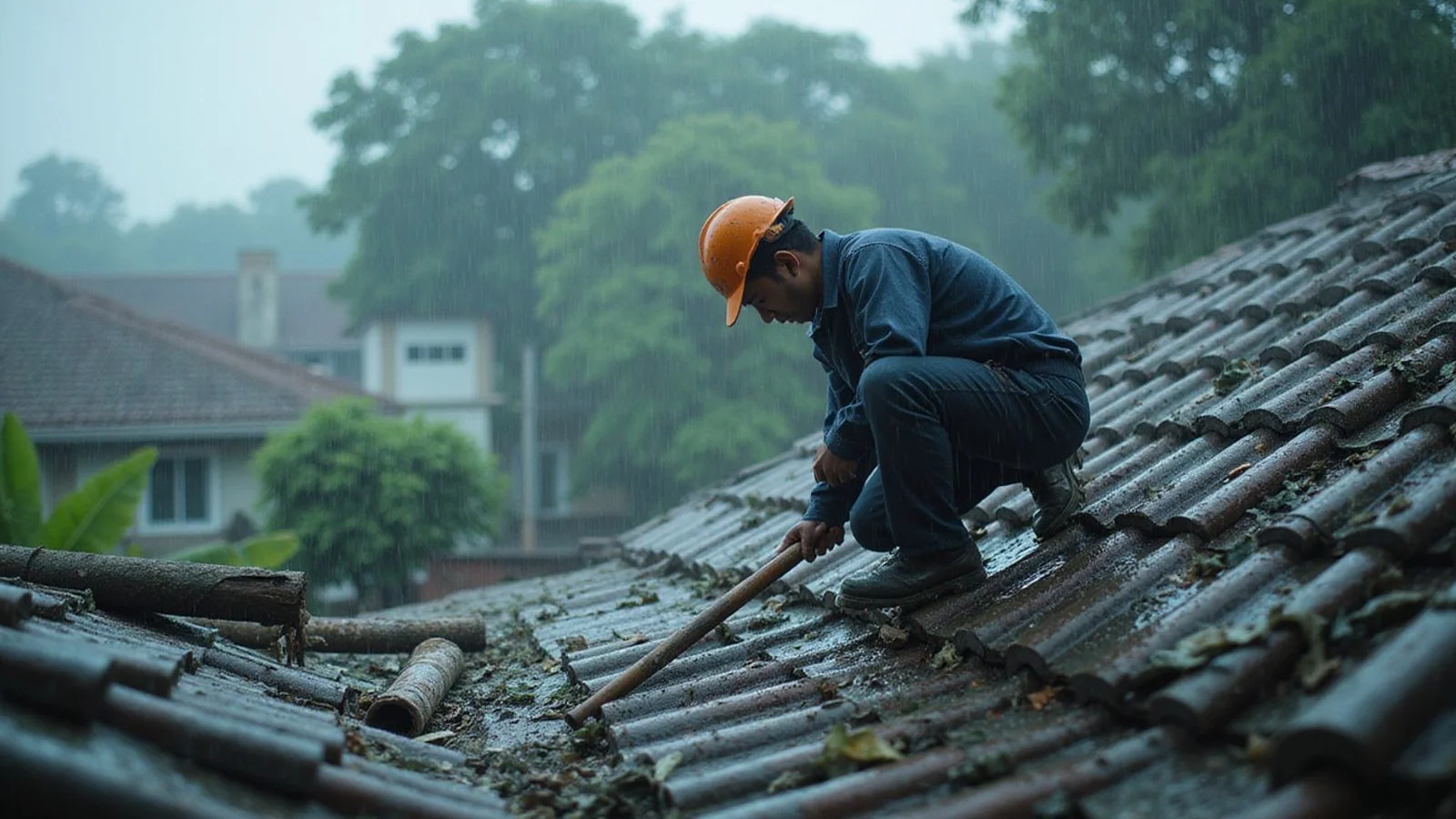
Klang Valley monsoons deliver sustained, wind-driven rain that pushes water sideways under tiles and into joints. We constantly observe how a roof easily handles regular afternoon thunderstorms but fails entirely during the Northeast Monsoon. The sheer intensity of our tropical storms means water volume quickly overwhelms standard drainage.
A roof might survive a short downpour, but sustained monsoon conditions force water inside because:
- Wind physically pushes water upward under the tile overlaps.
- Continuous rain saturates your underlayment, allowing slow leaks to accumulate.
- Strong gusts shift and lift the tiles, creating temporary gaps that remain hidden in calm weather.
Our inspectors often find that roofs pass dry-weather checks with flying colours, only to leak unexpectedly in November. Property managers must understand why roofs leak in malaysia during these specific months. The combination of high wind and water volume exposes microscopic flaws that a standard visual check misses.
Cracked Ridge Caps
The ridge is the peak where two roof slopes meet, and it relies on mortar-bedded ridge cap tiles to stay sealed. We measure daytime roof surface temperatures hitting 60°C in the Malaysian sun, which then plummet to 28°C during a sudden afternoon shower. This extreme daily thermal cycling fatigues the standard wet-fix mortar over a period of 5 to 15 years.
Once the mortar cracks, water slips behind the ridge cap and runs down the underside of the tiles. You will typically spot this as a spreading brown stain near the top of an internal wall. Our crew highly recommends switching to a dry-fix system, which uses mechanical clips instead of cement, for modern renovations.
Re-bedding the ridge cap with fresh mortar fixes the immediate issue. We handle this precise work routinely across the region. You can review our roof leak repair service page to see the exact method for replacing deteriorated mortar.
Wet-Fix Mortar vs. Dry-Fix Systems
| System Type | Weather Resistance | Average Lifespan |
|---|---|---|
| Traditional Wet-Fix (Mortar) | Cracks under extreme thermal cycling | 5 to 15 years |
| Modern Dry-Fix (Mechanical) | Flexes naturally with temperature shifts | 20+ years |
Blocked Or Damaged Valleys
A valley is the inward angle where two roof slopes intersect, making it the most water-intensive section of your entire home. We see enormous volumes of water funnelled through these metal-lined channels during heavy tropical storms. Valley iron exists specifically to direct this rushing water cleanly into your gutter.
Two specific failures cause the majority of valley leaks:
- Debris blockage: Leaves, twigs, and grit from nearby trees collect in the channel, forcing water to back up under the side tiles and spill into the cavity.
- Corrosion and sealant failure: Older galvanised valley iron rusts completely through, or the edge sealants break down from constant moisture exposure.
Our current pricing data for 2026 shows that repairing a leaking valley typically falls into the moderate to major repair category, costing anywhere from RM300 to RM1,500 depending on the damage. Keeping trees trimmed back from the roofline is a simple preventative measure. We suggest clearing out these valleys at least twice a year to prevent expensive water damage.
The fix usually involves a thorough pressure cleaning or completely replacing the rusted valley iron. Property owners often miss this hidden rust until it is too late.
Broken, Slipped Or Worn Tiles
Common Tile Profiles in Malaysia
Both clay and concrete tiles degrade physically over decades of exposure to the elements. We frequently work with popular local profiles like Monier Elabana concrete tiles or traditional GCI clay tiles. Clay naturally loses its glaze and becomes brittle, while concrete often cracks under accidental impact.
Anywhere a tile is broken, slipped, or missing creates a direct, unshielded path for water to enter the underlayment. Our contractors constantly find cracked tiles caused by careless foot traffic from previous maintenance workers.
Pro Tip: Never step directly on the middle of a roof tile. Always place your weight where the tile overlaps the structural timber batten to avoid snapping it.
Replacing an individual cracked tile is relatively inexpensive, averaging RM15 to RM40 per piece for the labour and materials. We always advise buying an extra bundle of tiles during a new build so you have a perfect colour match for future repairs. If the underlying moisture barrier has aged too, that surface water pours straight into your ceiling cavity.
Some tile damage remains highly visible from the ground, but microscopic hairline fractures stay hidden. A proper roof inspection catches exactly what you cannot see from the driveway. We use close-up analysis to spot these hairline weaknesses before they turn into costly interior flooding.
Failed Flashing
Flashing forms the critical seal at junctions where your roof meets a vertical wall, ventilation pipe, or parapet. We primarily see lead, aluminium, or galvanised steel used for these transition zones in standard Klang Valley homes. Constant exposure to intense solar heat causes these metal strips to expand and contract daily.
Over time, this continuous thermal movement degrades the flashing in three distinct ways:
- The edges lift up completely as the waterproof sealant dries out and fails.
- Galvanised steel materials corrode and develop pinhole rust leaks.
- The entire strip pulls away from the wall if the original mortar bedding cracks.
Our repair logs show that failed flashing usually directs water into the wall cavity itself. This means the resulting damage often shows up as a damp, peeling stain running down an internal wall, rather than a classic drip from the ceiling. We strongly prefer replacing old rusted steel with flexible, high-grade aluminium flashing to better handle local temperature extremes.
Underlayment Breakdown
Under the tiles sits a crucial layer of underlayment, commonly known as sarking, which acts as a secondary moisture barrier. We rely on this reflective foil layer to catch any stray water droplets that manage to blow past the surface covering. Older sarking materials simply cannot survive decades of baking at extreme temperatures inside a sealed attic space.
The material eventually tears, becomes incredibly brittle, or physically slips out of position. Our inspection teams frequently find roofs where the foil has turned to dust in the hottest sections near the ridge. Once that protective barrier is gone, any minor surface leak drips directly onto your ceiling plasterboard.
The Hidden Cost of Sarking Failure
Underlayment replacement is almost exclusively done as part of a comprehensive re-roofing project because the entire top covering has to come off for access. We want property owners to understand that a perfect-looking concrete tile exterior means nothing if the paper-thin barrier underneath has disintegrated. Upgrading to a heavy-duty, tear-resistant woven sarking provides far better protection for the next 20 years.
What Most Klang Valley Leaks Have In Common
The clear pattern across all our emergency service calls is highly consistent from year to year. We see that heavy monsoon rain simply exploits a minor weak point that has been quietly deteriorating for months. A proactive check usually catches these exact roof leak causes klang valley homeowners worry about before they require major structural work.
By the time water visibly drips into your living room, the necessary repair has grown significantly larger and more complex. Learning to recognise the early signs your roof is leaking gives you the head start needed to act before that happens.
Our data indicates that ignoring a RM300 minor fix often leads to interior water damage requiring upwards of RM3,000 in restoration. Scheduling an assessment before the next Northeast Monsoon arrives is much safer than joining the panic queue after a storm hits. Book a free roof inspection today and let our team secure those vulnerable weak points while they are still cheap and easy to fix.