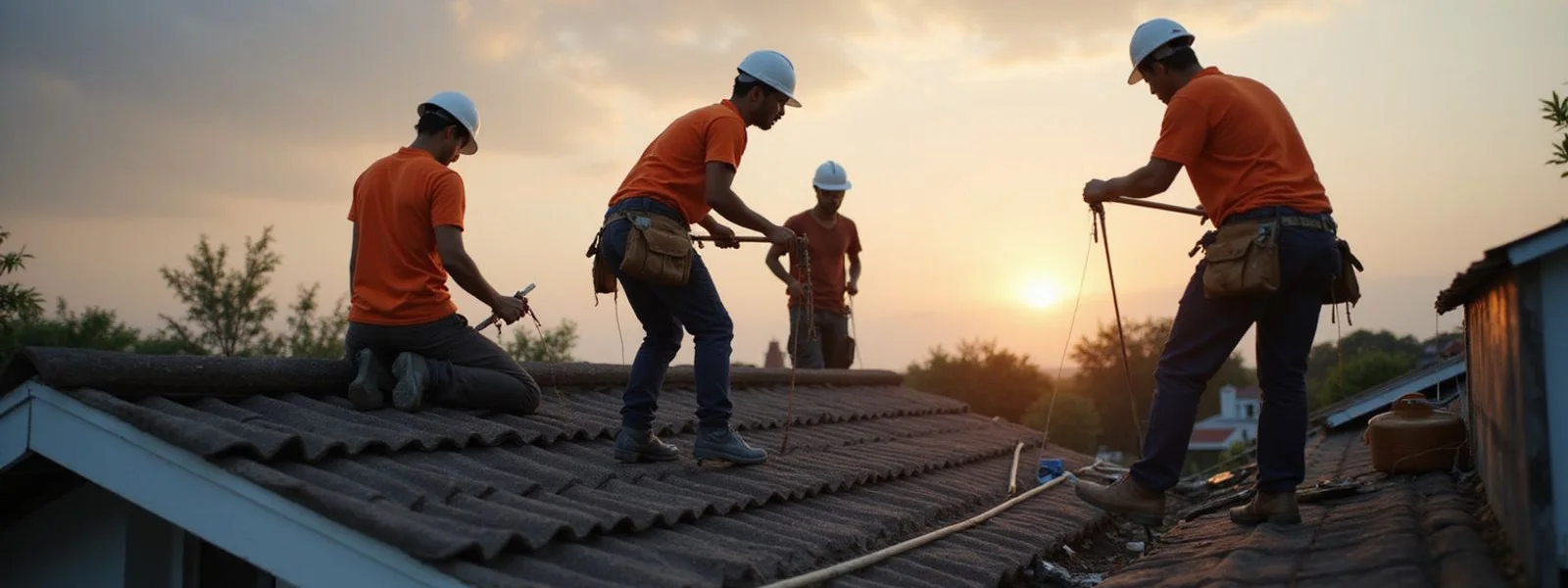
We often see flat concrete roofs in the Klang Valley treated as a “fix it and forget it” structure. This mindset rarely ends well.
A 2025 study by Nippon Paint and MIPFM found that 90% of Malaysian buildings experience roof leaks.
Market Insight: In Malaysia’s tropical climate, proactive maintenance is the only proven defence against rapid concrete degradation.
Our team knows these issues stem directly from local climate extremes. Temperatures on a tropical flat roof can hit 82°C at midday and drop to 17°C by early morning.
We understand this massive thermal shock causes constant expansion and contraction. Let’s examine the clearest signs roof needs waterproofing and explore the most effective ways to respond.
1. Damp Patches On The Ceiling Below
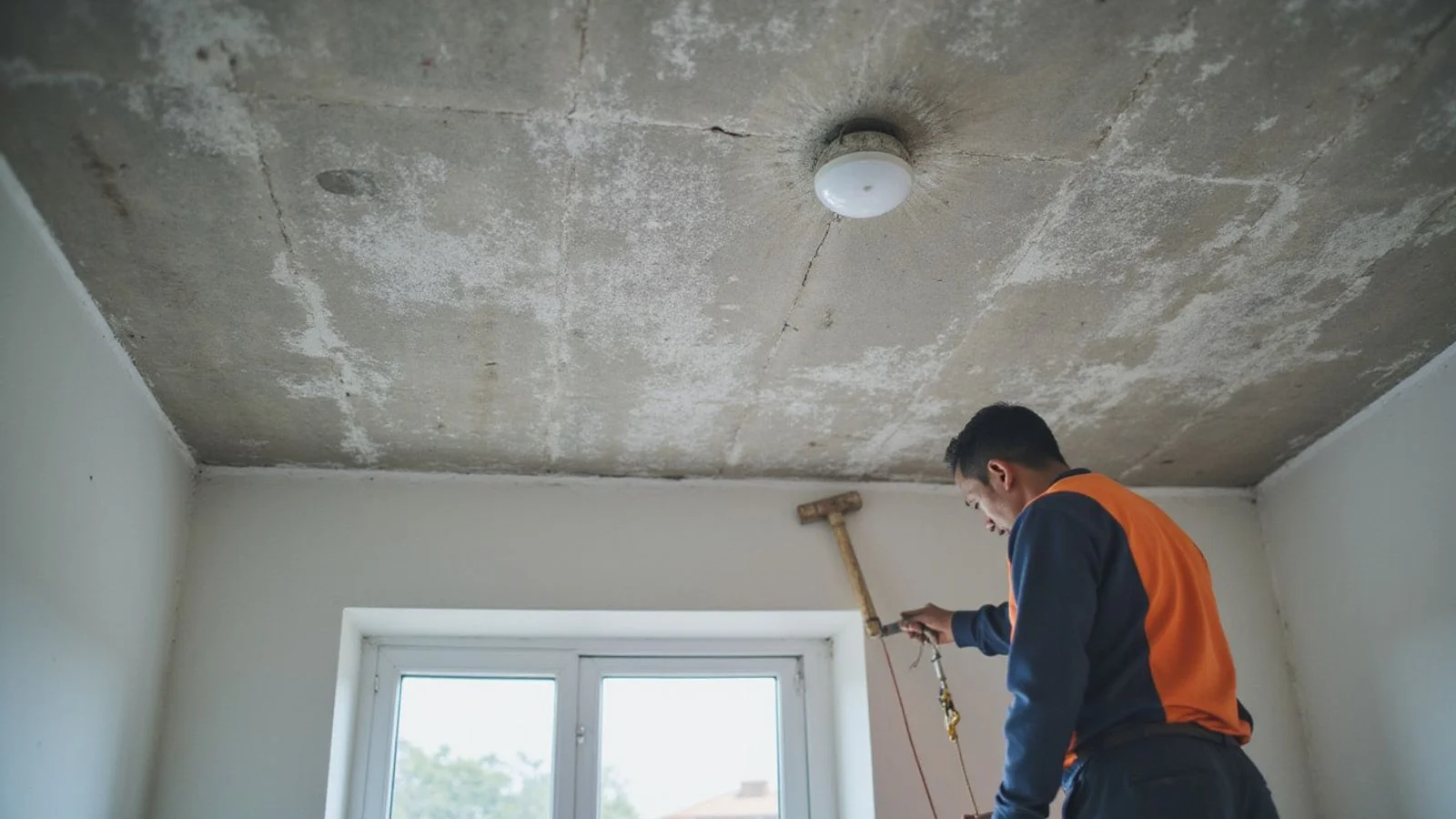
One of the most obvious concrete roof waterproofing signs is a dark, damp patch appearing on the ceiling directly underneath the flat slab. Water has worked its way through the slab and is now pooling below.
Our technicians use the specific location of these interior stains to trace the exterior origin point. Where the stain appears gives you a massive clue about the failure type.
We typically categorise these stains into three main groups to diagnose the root cause:
- Stain along the line of a visible crack above means a structural crack is leaking.
- Stain near a drain or upstand points to a detail-area failure.
- Stain in the middle of the slab with no obvious crack suggests a widespread membrane breakdown across the surface.
This evidence confirms the slab is no longer waterproof and requires immediate intervention. Our experience shows that ignoring these early patches quickly leads to compromised structural integrity. Acidic rain in heavy industrial areas like Puchong can accelerate this concrete wear significantly.
2. White Efflorescence On The Concrete
Efflorescence is the white crystalline powder you sometimes see forming on the underside of a ceiling or the slab surface. We commonly find this powdery residue near joint lines and minor cracks.
It forms when water moves through concrete while carrying dissolved calcium hydroxide and other minerals. Our specialists want to clarify what this powdery substance actually indicates.
Pro-Tip: Do not paint over efflorescence. The trapped moisture will simply cause the new paint to bubble and peel off within a few weeks.
When the water reaches the surface and evaporates, the minerals are left behind as a stark white deposit. We know homeowners often mistake this for dried paint or dust. Brushing it off only provides a temporary visual fix.
What this tells you is that moisture is actively moving through the slab right now. Our waterproofing experts consider this an ongoing leak that deposits minerals every time it rains, rather than an old dry stain. Act fast before the internal steel reinforcement bars begin to corrode and expand.
3. Visible Hairline Cracks On The Slab Surface
Visible hairline cracks on the surface indicate thermal cycling or structural movement has potentially compromised your waterproofing layer. We see this natural wear and tear on almost every building older than five years. The real question is whether these fissures are safely sealed by the membrane or have worked all the way through to the substrate.
Our inspections look for four specific warning signs that cracks require immediate treatment:
- Cracks are visible right through the existing membrane, indicating it has split.
- Cracks exist on a bare slab with no protective coating.
- New structural fissures are appearing where none existed before.
- Cracks perfectly align with the damp staining found on the ceiling below.
Deciding on the best fix depends heavily on the severity of the opening. We usually recommend a few different methods based on the damage. These fractures need either PU injection to seal them from within, a completely new membrane to bridge them, or a combination of both.
Our current pricing data for the Klang Valley shows polyurethane crack injection costs around RM150 to RM300 per point. This targeted fix saves thousands compared to a full roof replacement.
4. Peeling, Cracking Or Missing Membrane
A membrane that is actively peeling, splitting, or missing entirely has lost its bond to the substrate and is no longer waterproof. We look closely for four specific types of visual degradation:
- Peeling heavily at the outside edges.
- Splitting widely across the main surface.
- Missing entirely in patches where it degraded away.
- Brittle and lifting off the concrete in thick chunks.
Ignoring these symptoms is a massive risk. Our crews frequently find this level of damage means the material is completely past its useful life. The system is compromised even in the spots where it still looks physically intact. We know the bond to the substrate has failed, allowing moisture to travel underneath the remaining coating.
Standard torch-on bitumen membranes are notorious for this, typically failing after three to five years under extreme Malaysian UV exposure. Our team often replaces these failing installations with modern alternatives. A completely new, UV-resistant system is needed to restore protection.
5. Leaks That Return After Surface Patching
If you have patched a leak with bitumen paint or generic sealant and it leaks again within a season, the underlying cause remains active. We constantly encounter properties where temporary fixes have masked a much larger structural issue.
The root problem usually falls into one of two categories:
- A moving structural crack that a rigid surface patch could not bridge.
- General membrane failure occurring across the entire concrete slab.
Our assessments prove that slapping more DIY sealant onto the roof will not fix the problem. The building continues to expand and contract, which easily tears open cheap surface repairs.
We always advise property managers that the slab needs a proper, professional waterproofing overhaul. A flexible elastomeric coating or deep injection is the only way to handle a dynamic environment.
6. Ponding Water That Doesn’t Drain
After a heavy rain, water should drain completely from the flat slab within a few hours. We consider it a severe drainage problem if you have large areas where water sits for a day or more. This constant ponding accelerates membrane wear at an alarming rate.
Our analysis aligns with industry data showing standing water breaks down oil-based asphalt materials very quickly. Even a high-quality waterproofing system will fail prematurely under constant submersion.
| Solution Type | How It Works | Best Application |
|---|---|---|
| Slope Correction | Adding a screed layer to create a 1:80 fall ratio. | Roofs with heavy structural sagging. |
| Ponding-Tolerant System | Applying specialised polyurethane liquid membranes. | Flat roofs where adding screed is too heavy or costly. |
We solve this issue by evaluating the structural load capacity first. Correcting the slope is ideal, but chemical resistance is a faster workaround.
Our clients appreciate knowing their options before committing to a major overhaul. The right choice depends entirely on your specific building layout and budget constraints.
What To Do Next
If you are noticing any of these issues, knowing when to waterproof a roof is your best defence against severe structural decay. We can tell you exactly what is happening above your ceiling.
Professional assessment takes the guesswork out of the repair. Our diagnostic process will determine three crucial details:
- Whether the issue is structural cracking, a surface membrane breakdown, or a combination of both.
- Which specific method fits your budget and property best, such as PU injection, a torch-on membrane, liquid PU, or cementitious coatings.
- What the exact scope of work and realistic cost looks like for your location.
We handle these exact situations daily. Finding a permanent fix is easier than you think. Our roof waterproofing service covers all the common Malaysian concrete-roof scenarios. Book a free inspection and we will give you an honest, data-backed recommendation.
Frequently Asked Questions
How do I know my concrete roof needs waterproofing?
Is efflorescence a sign of a leak?
Will waterproofing stop existing leaks?
Need help with this?
Our team handles roof waterproofing & pu grouting across Puchong and the Klang Valley. Free inspection, transparent quote.