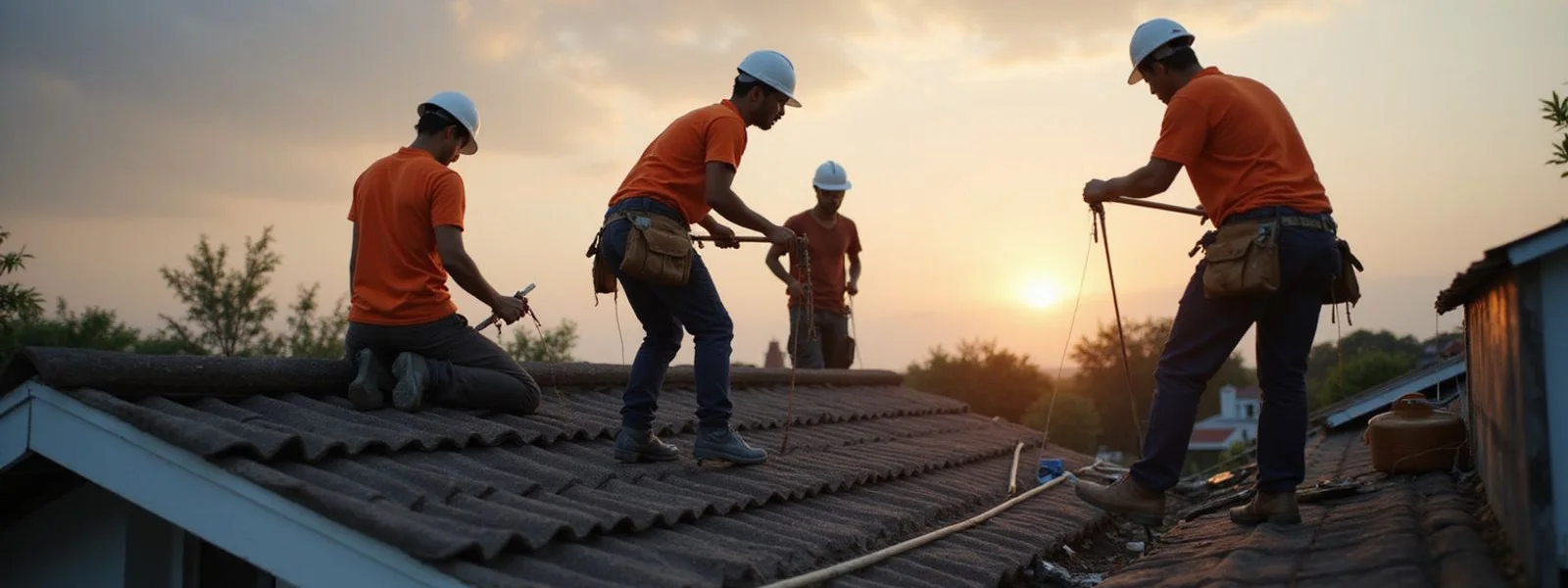
We often see property managers scratching their heads over a recurring concrete flat roof leak that simple patching cannot fix. Flat concrete structures handle standing water completely differently than pitched roofs. Our team has found that treating a slab like a standard tiled roof is a guaranteed path to failure.
A permanent fix requires a dedicated waterproofing approach rather than basic surface repairs. We will break down the three main reasons these slabs fail and outline the exact repair methods that hold up against heavy local rainfall.
Why Pitched-Roof Fixes Don’t Work On Concrete Slabs
Heavy monsoons in the Klang Valley dump between 2,500mm and 3,000mm of rain annually on local properties. We know that pitched roofs easily handle this deluge by shedding water rapidly through gravity. Each overlapping tile guides the rainwater straight into the gutters before it can penetrate the surface. Our maintenance calls show that repairing these sloped roofs simply involves replacing damaged tiles or sealing ridge junctions.
A concrete flat roof lacks this steep gravitational advantage. We see that slabs are built nearly flat, usually featuring only a tiny gradient directed toward the drainage points. Rainwater inevitably pools on the surface for extended periods following a heavy Puchong thunderstorm. Our inspections reveal that trapped water will force its way through any hairline crack or degraded coating. This stark contrast dictates entirely different repair strategies.
| Feature | Pitched Roof | Flat Concrete Slab |
|---|---|---|
| Water Shedding | Rapid gravity runoff | Slow drainage, highly prone to ponding |
| Primary Defense | Overlapping tiles | Continuous waterproof membrane |
| Common Repair | Replacing cracked tiles | Full surface membrane application |
We always explain to property owners that a flat slab fix is entirely about establishing a continuous waterproof surface.
The Three Failure Modes
Several environmental factors constantly attack concrete flat roofs in our tropical climate. Our thermal imaging tools regularly record exposed surface temperatures hitting 60°C under direct Malaysian sun. This intense heat causes severe thermal cycling, leading directly to the three main failure modes.
Ponding Water Accumulation
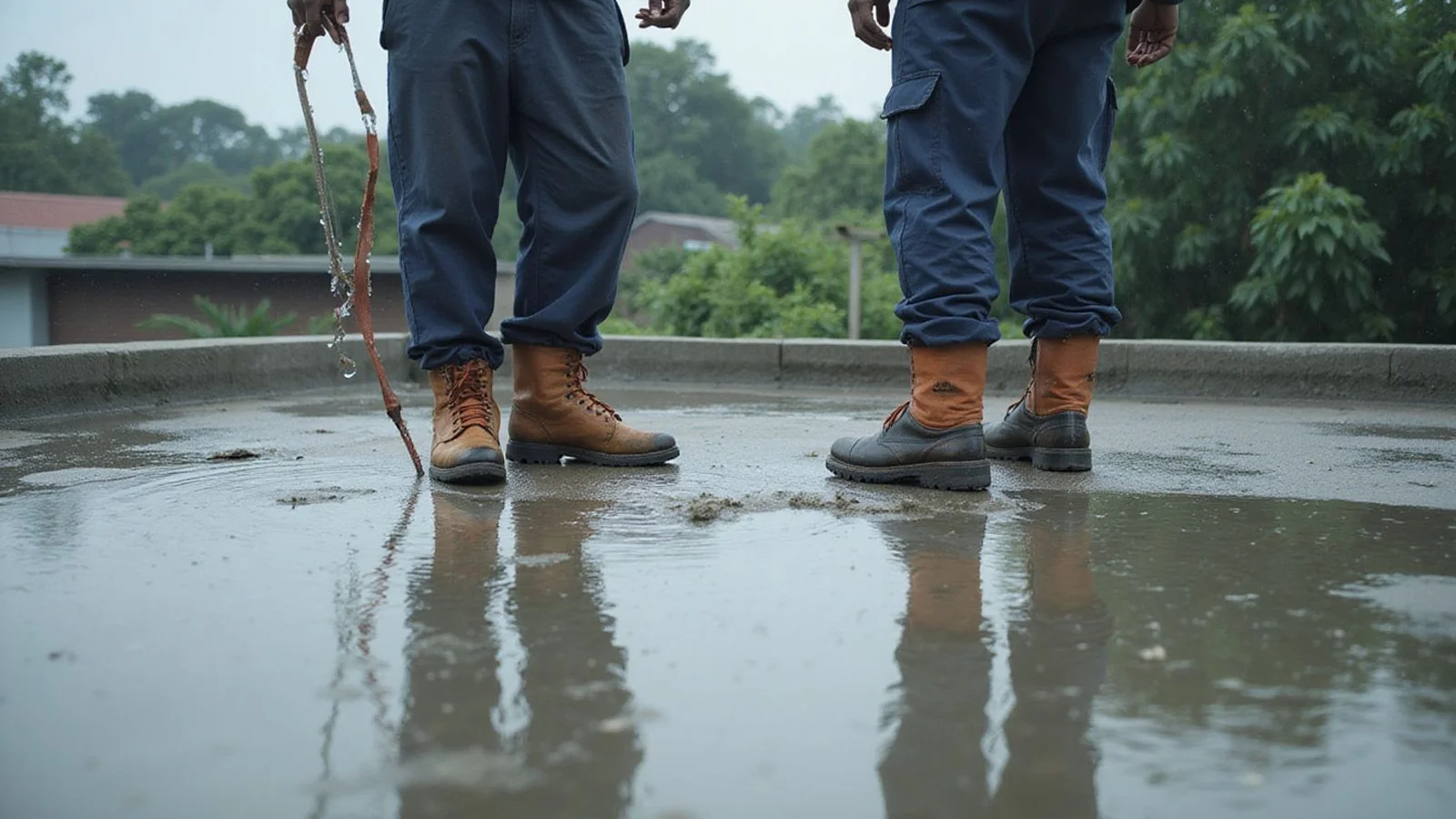
We frequently encounter flat roofs where the concrete slab simply does not drain properly. Rainwater collects in low spots and sits for days after a storm. Our tests show that prolonged standing water slowly degrades the original protective membrane. The concrete eventually absorbs this trapped moisture, resulting in severe interior ceiling leaks.
Structural Slab Cracks
We constantly repair hairline cracks caused by intense daily temperature fluctuations. Concrete has a thermal expansion coefficient of about 10 millionths per degree Celsius, meaning the material expands and contracts significantly every day. Our technicians find that rainwater enters these expanded fissures and travels straight through the slab. Settlement or natural structural movement also creates pathways for a flat roof slab leak to develop.
Failed Original Membranes
We often strip away old waterproofing layers that were applied decades ago during the initial building construction. Intense UV radiation causes these aging materials to peel, blister, and wear thin. Our crews notice that failures happen fastest around complex detail areas like upstands, drains, and parapet walls. These vital junction points include the following vulnerable zones:
- Concrete parapet corners
- Rainwater drainage outlets
- Air conditioning compressor mounts
- Vertical upstand edges
We ensure these specific details get extra reinforcement during any restoration project.
How They’re Fixed
Proper remediation demands targeted solutions for each specific type of damage.
Correcting the Gradient
We tackle ponding water by correcting the structural gradient. Adding a fresh cementitious screed layer creates a proper slope that directs water straight into the gutters. Our preferred alternative is installing a heavy-duty torch-on system that actively tolerates standing water much better than basic paint.
Injecting Structural Gaps
Filling structural gaps requires driving specialized materials directly into the concrete body. We use PU pressure injection to seal wet fissures from the inside out. This polyurethane resin reacts with moisture to expand, fill the void, and cure to a rigid block that achieves an impressive 80 MPa compressive strength. Our experience proves that applying a surface coating over a cracked slab fails rapidly, making internal crack injection mandatory.
Replacing the Barrier
Stripping the deteriorated layer remains the only option when dealing with a widespread membrane failure. We carefully prep the bare substrate using industrial grinders before applying a completely new system. The best commercial replacement options include a torch-on bituminous sheet, a liquid polyurethane application, or a cementitious mixture. We always encourage clients to review our torch-on vs liquid PU membrane guide for an objective performance comparison.
Balconies Are Their Own Problem
A balcony leak waterproofing project presents a completely different set of challenges compared to a wide-open roof. We find that residential condo balconies across Selangor leak far more frequently than main rooftop slabs. These smaller exposed spaces take a massive beating from direct driving rain and heavy daily foot traffic. Our field data points to four primary reasons why these spaces fail so consistently:
- Intricate detail work around metal railings and sliding door tracks.
- Constant foot traffic that grinds dirt into the protective layers.
- Restricted fall areas that make rapid drainage difficult.
- Tropical leaves and urban dust quickly clogging the small drain outlets.
Applying thick, rolled sheet materials around these tight corners rarely works well. We almost always tackle balcony projects using a high-grade liquid polyurethane application. This liquid approach cures into a continuous, unbroken coating that handles complex metal detailing far better than traditional overlapping sheets.
What A Proper Slab Waterproofing Job Includes
We follow a strict, systematic process to ensure every repair holds up to local weather extremes. A professional execution must include the following critical phases:
- Thorough Inspection: Identifying whether the core issue is structural cracking, severe ponding, or total membrane degradation.
- Surface Preparation: Pressure washing to remove thick tropical algae, followed by grinding and priming the bare concrete.
- Crack Treatment: Injecting expanding polyurethane directly into deep structural fissures.
- Complex Detail Work: Reinforcing vertical upstands, tight parapets, drains, and sharp corners.
- Coating Application: Installing the appropriate torch-on, liquid polyurethane, or cementitious material.
- Verification Testing: Flooding the completed area for 24 to 48 hours to confirm absolute watertight integrity.
We refuse to sign off on any project until that final 48-hour flood test proves the deck is completely dry below. Most premature failures originate from contractors skipping that vital surface preparation stage.
Why People Try Patching First (And Why It Fails)
We completely understand why building owners initially reach for a tin of cheap bitumen paint. Surface patching with generic hardware store sealants feels like an appropriate, low-cost response to a minor drip. Our repair logs, however, tell a very different story about these temporary fixes.
“Basic sealants cannot handle the extreme thermal movement that concrete experiences under the harsh midday sun.”
We regularly see these stiff patches split wide open by the time the next November monsoon arrives. The cumulative financial drain of paying for repeated temporary patches quickly exceeds the cost of a single, professional application. We strongly advise owners to stop wasting money on temporary paints once a flat roof has leaked more than once.
A structural problem demands a structural solution. We invite you to Get a free inspection so our experts can determine the exact method your specific slab requires.
The complete roof waterproofing service catalog covers advanced PU injection, heavy-duty torch-on sheets, and premium liquid coatings. We always select the precise system that guarantees long-term protection, rather than just choosing the easiest option.
Frequently Asked Questions
Why does my flat concrete roof keep leaking?
Can a leaking balcony be waterproofed?
Why doesn't tile repair work on a flat roof?
Need help with this?
Our team handles roof waterproofing & pu grouting across Puchong and the Klang Valley. Free inspection, transparent quote.