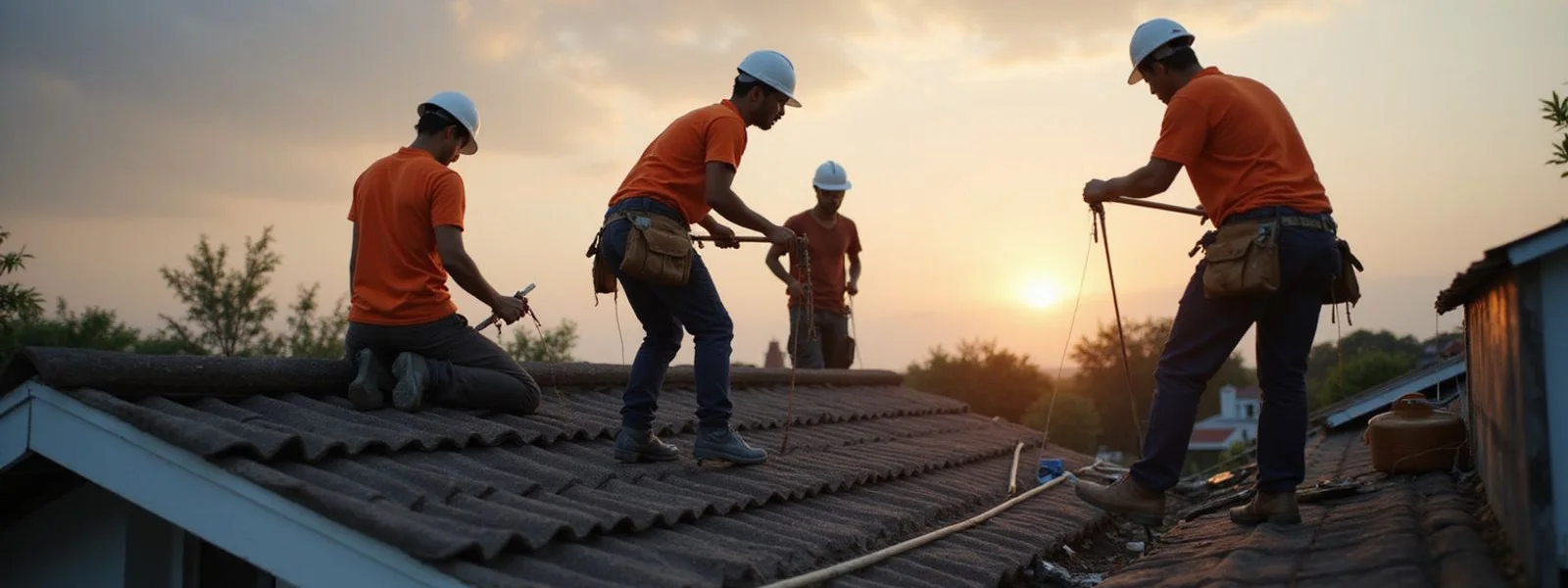
We constantly see the damage caused by extreme weather shifts on flat reinforced concrete roofs across the Klang Valley.
The transition from a blistering 35-degree afternoon sun to a sudden monsoon downpour causes severe thermal expansion, cracking poor materials within months. This is exactly why choosing the right system is a critical structural decision.
Malaysia receives over 2,500mm of annual rainfall, so your barrier must handle heavy ponding water. Let’s review the hard data on torch on vs liquid membrane systems and map out exactly which option fits your specific building.
Torch-On Bituminous Membrane
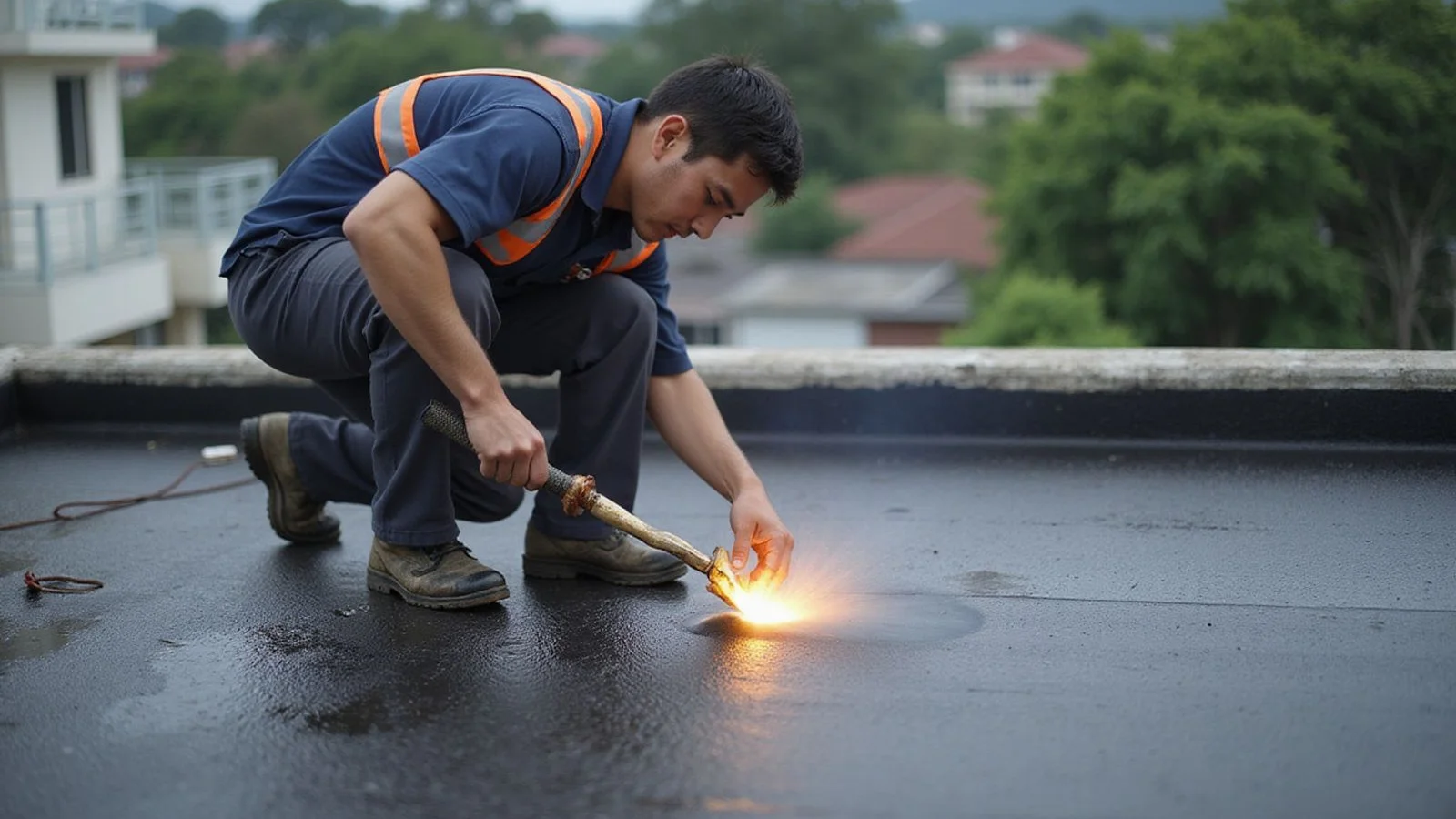
A pre-manufactured sheet, typically 4mm thick, of modified bitumen is the heavy duty choice for flat roofs. Contractors install this layer by heating the underside with a propane torch and rolling it directly onto a primed substrate. The intense heat melts the bitumen at the bonding line, fusing the sheet to the concrete surface.
Our teams often recommend Atactic Polypropylene (APP) modified bitumen for local projects because it handles high temperatures exceptionally well. Recent 2026 construction pricing shows this system ranges from RM 10 to RM 18 per square foot in the Klang Valley. When comparing torch on bitumen vs pu, this sheet method typically secures a longer 10 to 15-year workmanship warranty.
Strengths:
- Extremely durable across large, flat areas like commercial shop lots.
- Handles standing water far better than most standard liquid coatings.
- Lasts 10 to 15 years when properly welded and maintained.
- Established system with a proven track record across Malaysia.
Weaknesses:
- Requires controlled flame application, making a highly trained installer essential.
- Harder to detail around complex shapes like drains, parapets, and HVAC vents.
- Sheet laps become a major failure point if the seams are not fully melted and bonded.
- Leaves a visible mineral finish unless you cover it with a protective topcoat or screed.
Best for:
- Large residential or commercial flat roofs with minimal obstructions.
- Areas that frequently experience pooling rainwater after heavy storms.
- Long-term applications where maximum durability is the absolute priority, and you want to know how long roof waterproofing lasts before committing.
Liquid PU Membrane
A liquid polyurethane coating applies easily by roller, brush, or spray equipment. The compound cures to form a continuous, flexible elastomeric film that covers the entire roof surface.
We find this approach highly effective for properties with multiple air conditioning compressors and intricate piping. A major insider tip from 2026 industry forums highlights that surface preparation is the deciding factor for liquid systems. Concrete slabs must dry completely for two to four weeks before application, as trapped moisture will cause the coating to blister and peel under the hot sun.
If you are looking for the best roof membrane malaysia has to offer for detailed areas, premium brands like Pentens T200 or Sikalastic lead the market.
Strengths:
- Continuous coverage means there are no overlapping seams to fail over time.
- Exceptional around complex detailing like drains, upstands, and awkward pipe angles.
- Multi-layer build provides a highly controllable film thickness based on expected foot traffic.
- Delivers a visually cleaner final finish with a uniform colour profile.
Weaknesses:
- The thinner film is highly sensitive to UV breakdown unless finished with a dedicated protective topcoat.
- Surface prep is critical, and a dusty or damp substrate guarantees a bond failure.
- Application requires multiple coats with strict curing times between each layer.
- Liquid products vary widely in quality, meaning your choice of contractor heavily impacts the final result.
Best for:
- Balconies, terraces, and RC slabs with heavy detailing.
- Complex shapes that would be incredibly difficult to wrap cleanly with a sheet membrane.
- Refurbishment work over an existing membrane, provided the old surface is thoroughly prepared.
- Aesthetic-sensitive applications where a uniform look is desired.
Side-By-Side On The Key Variables
Here is a direct comparison of how these two methods perform across crucial project factors.
| Feature | Torch-On Membrane | Liquid PU Membrane |
|---|---|---|
| Application speed | Faster for large open areas | Faster for heavily detailed zones |
| Durability on flat surfaces | Very high (10 to 15 years) | High (Requires UV topcoat) |
| Detail handling | Awkward and time-consuming | Exceptional and highly adaptable |
| Ponding tolerance | Highly resistant to standing water | Acceptable with premium multi-coat systems |
| Surface prep sensitivity | Moderate | Extremely high (Needs totally dry concrete) |
| Installer skill required | Expertise in flame control and lap welding | Precision in mixing, coating, and detailing |
| Typical 2026 Cost (MYR) | RM 10 to RM 18 per sq ft | RM 10 to RM 15 per sq ft |
| Top Malaysia Brands | Awazel, Soprema, Index | Sika, Pentens, Nippon Paint |
Real-World Decision Examples
Our technicians inspect dozens of properties each month to determine the exact right fit. The choice between these systems comes down to the specific physical layout of the concrete slab. Here are four common scenarios observed across Puchong and the wider Selangor area.
- A 200 sq ft residential flat concrete roof, two drain outlets, simple parapet. Torch-on wins easily here. The large flat area and minimal detailing make a sheet application fast and incredibly durable.
- A 60 sq ft balcony with a complex rail base, drain in the corner, and three upstands. Liquid PU is the clear winner. The intricate detailing would be an absolute nightmare to seal correctly using a thick sheet membrane.
- A 500 sq ft commercial roof with heavy ponding in the centre, two vent stacks, large parapet. We typically deploy a hybrid approach for this layout. The field team lays torch-on for the main surface to handle the water, then applies liquid PU around the vent stacks and upstands to ensure a tight, impenetrable seal.
- Refurbishment over an aged, patched flat roof where stripping is not practical. Liquid PU is often much easier to bond to a prepared old surface. A sheet application requires a highly controlled, smooth substrate to prevent trapped air pockets.
Cost Comparison
There is no universal answer for which system is cheaper on paper. The final invoice depends entirely on economies of scale and site conditions.
- Cost-per-square-foot varies by area size, and larger jobs always drop the baseline rate.
- Liquid systems requiring three or four coats can easily match or exceed sheet material costs.
- Detailing complexity drives liquid labour costs up but rarely affects the raw material expenses for sheet rolls.
- Contractor rates differ based on their warranty terms and safety equipment.
Commercial vs Residential Pricing Constraints
We often explain to property managers that commercial shop lot repairs carry a different pricing structure. A 2026 market analysis shows that commercial flat roofs cost 20 to 30 percent more to waterproof than standard residential homes. This increase covers the necessary scaffolding, boom lifts, and strict safety compliance required for working at height in urban areas.
For most residential flat roofs in the Klang Valley, the two systems sit in very similar budget brackets once installation is factored in. The right choice is rarely the marginally cheaper one. It is always the option that perfectly suits the surface condition and the daily weather exposure.
How We Choose For Your Roof
We inspect the site directly to identify the exact conditions, measuring size, detailing, ponding risks, and substrate health. Based on those findings, the team recommends the exact system that fits the building profile. Sometimes, a hybrid approach offers the highest level of protection.
Our roof waterproofing service covers both systems with proper installation and certified materials. Get a free assessment and we will tell you exactly which one works for your roof.
Frequently Asked Questions
Is torch-on or liquid membrane better?
Which is cheaper?
Which lasts longer?
Need help with this?
Our team handles roof waterproofing & pu grouting across Puchong and the Klang Valley. Free inspection, transparent quote.